AI Workshop in the Mountains
The AI Team Revolution: from one assistant to an army of specialists — August 1, 2026, Avenue Park Hotel, Charvak
On August 1, 2026 the ACROPOLIS INTEGRO team held an off-site hands-on AI workshop — a full day of intensive work with AI technologies away from the office bustle, in the mountains on the shore of the Charvak Reservoir.
The venue was Avenue Park Hotel (Yusufkhona): a countryside resort overlooking Charvak, 15 minutes from the Chimgan cable car. The change of scenery worked exactly as intended: complex topics are easier to digest where nothing distracts you.
The AI team revolution
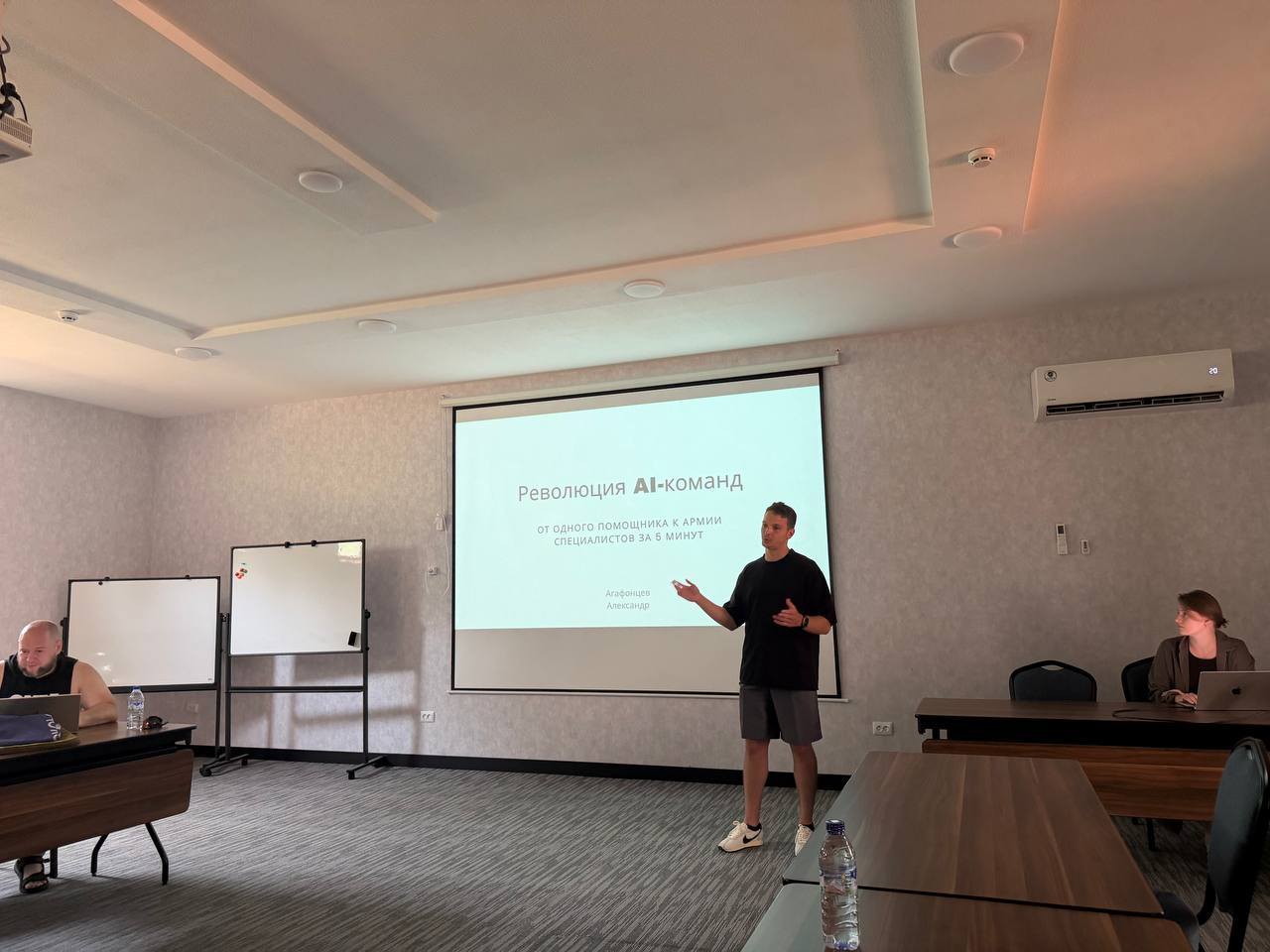
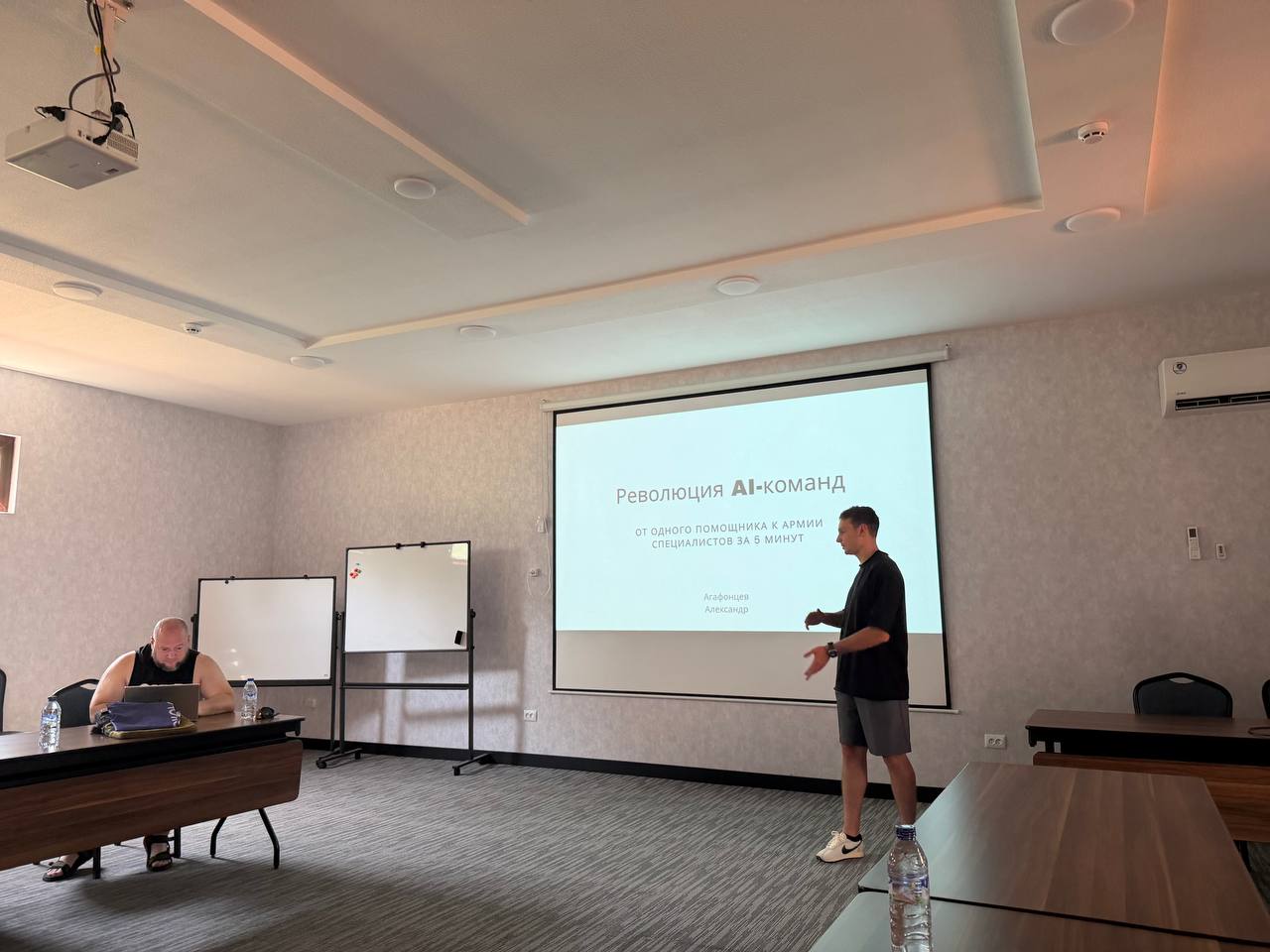
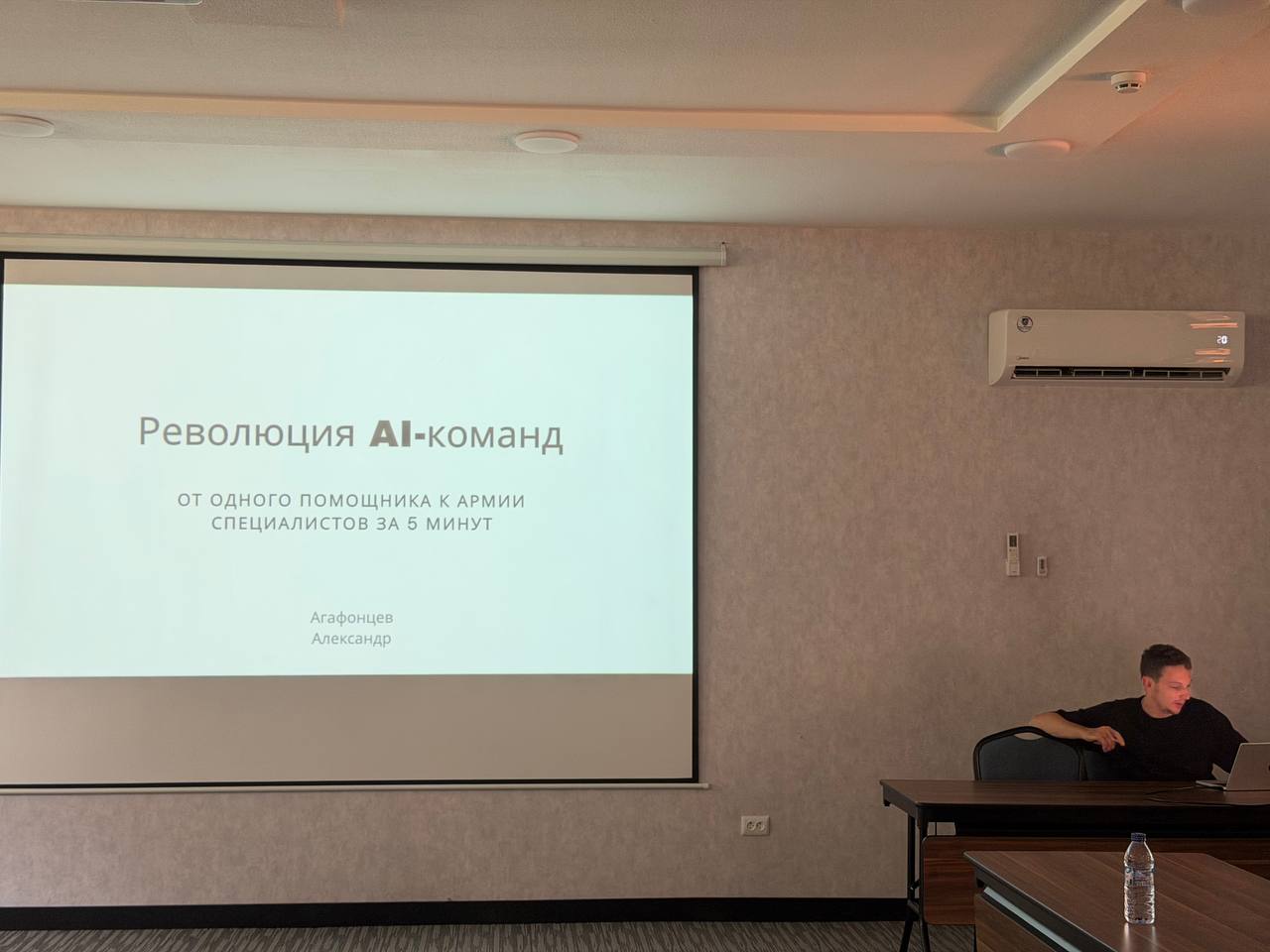
The centerpiece of the day was Alexander Agafontsev’s talk “The AI Team Revolution: from one assistant to an army of specialists in 5 minutes”.
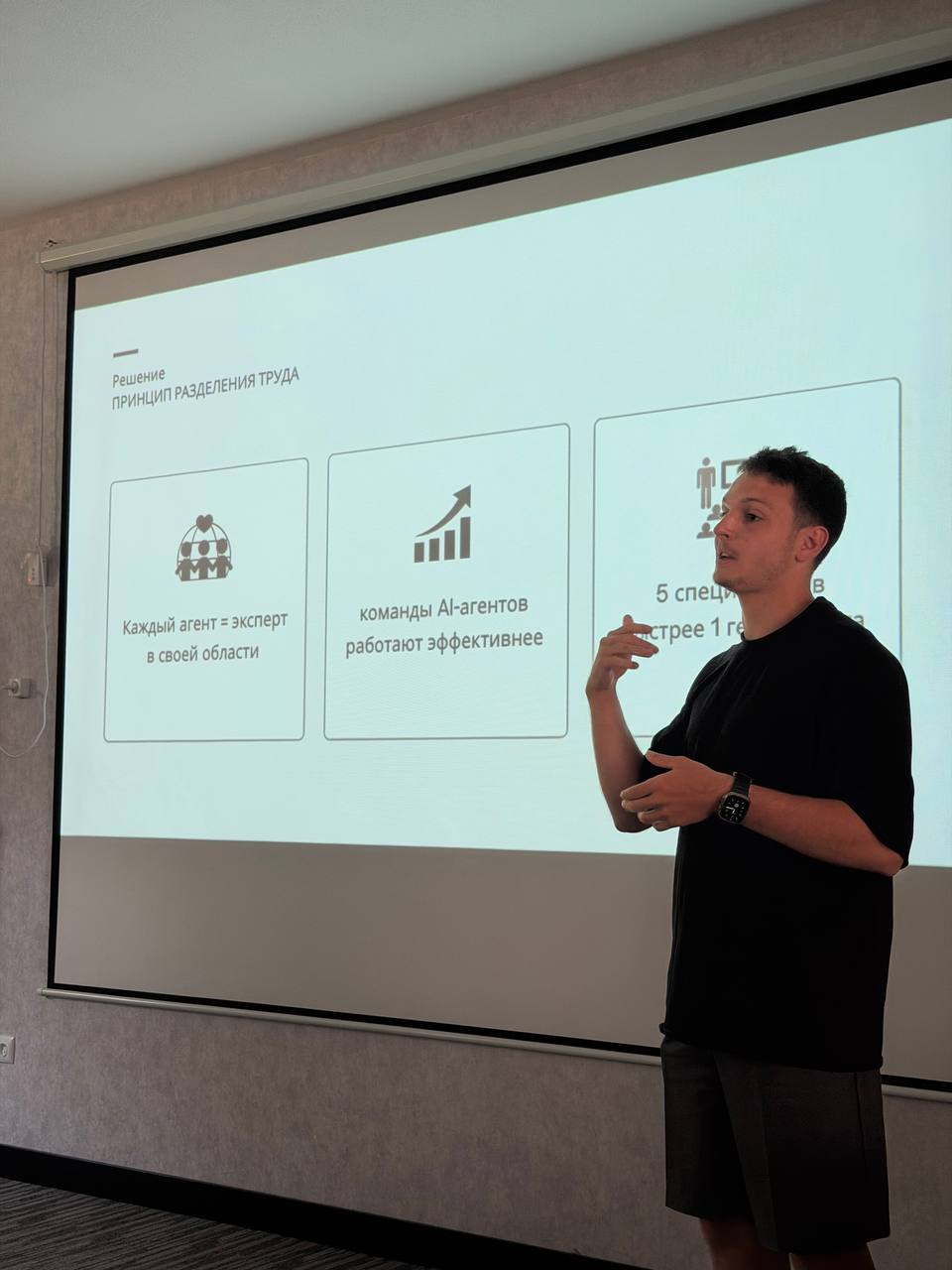
The starting point is the ‘mega-brain’ agent problem: one universal assistant can do everything but masters nothing. Constant context switching degrades quality, and giving such an agent precise instructions is nearly impossible. The answer is the division-of-labor principle: a team of specialist agents, each an expert in its own domain, works faster and better than a single generalist.
We looked at how this principle works in real systems:
- NASA and the Mars rover — every module has its own role and task, and agent coordination achieves the common goal
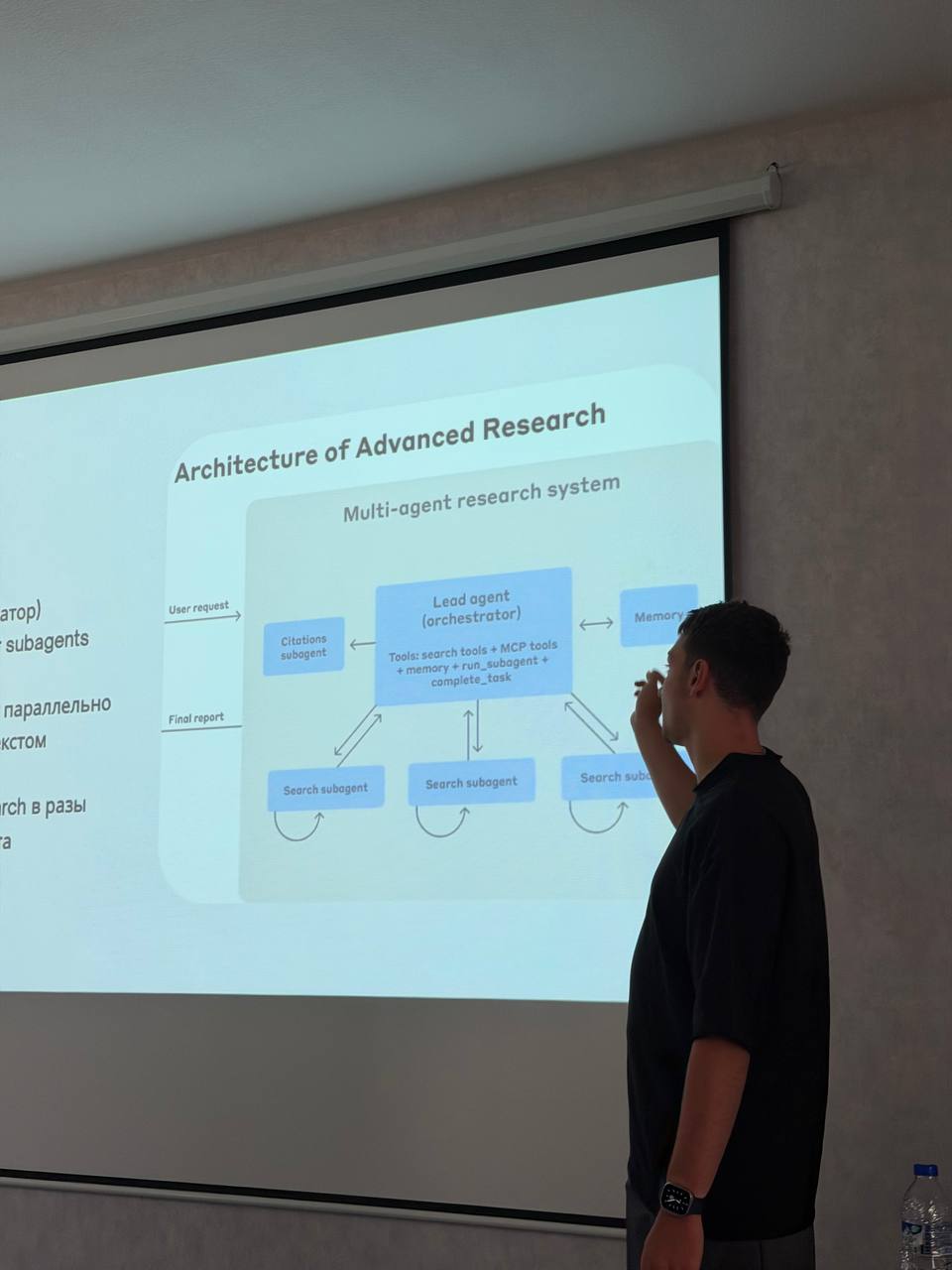
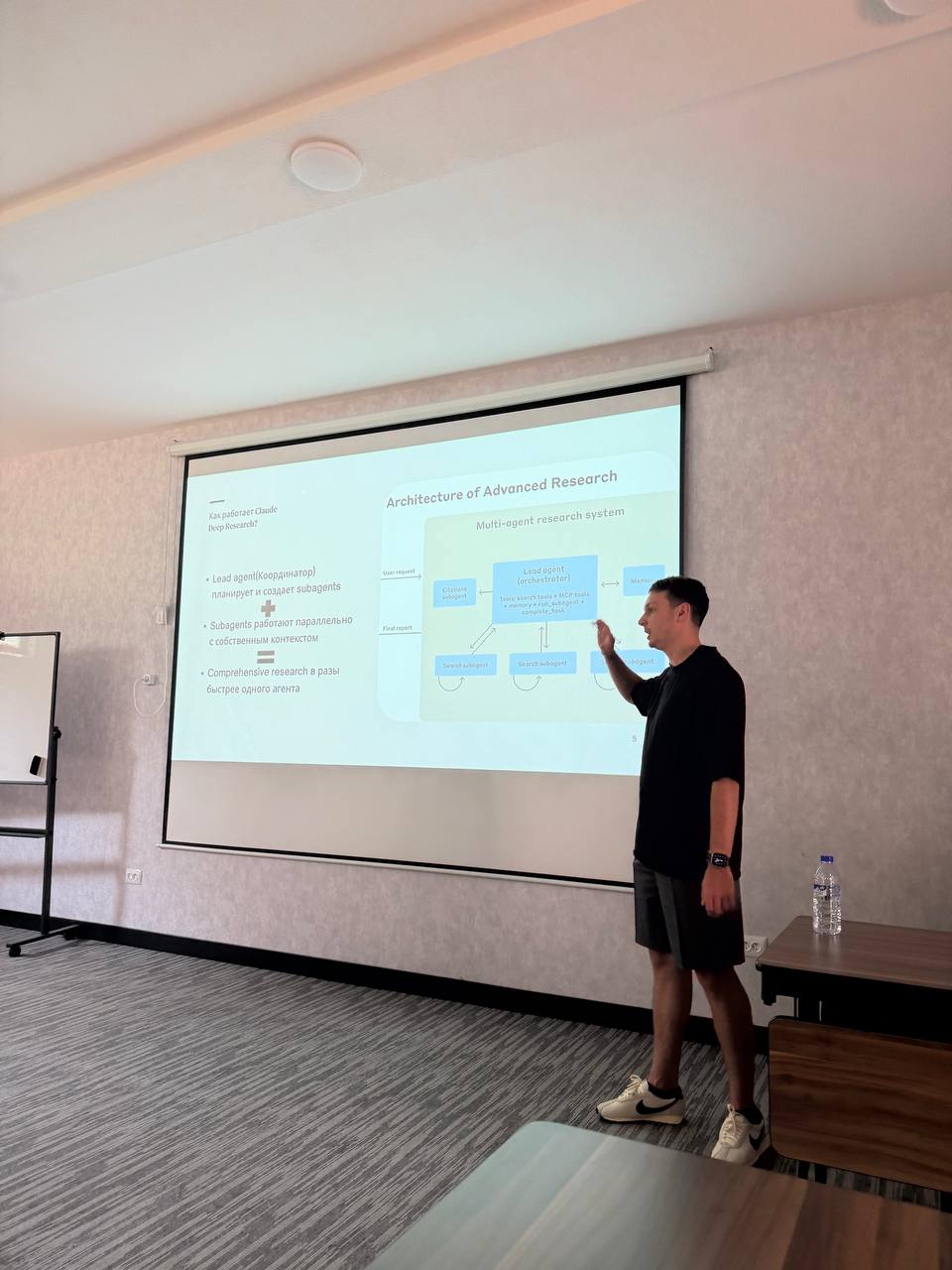
- Claude Deep Research — a lead coordinator agent plans and spawns subagents that work in parallel, each with its own context
- The ‘AI Loop’ problem — why an agent endlessly rewrites code without solving the task, and how context saturation forces human intervention
Multi-agent system architectures
We compared two fundamental approaches:
- Coordinator/Workers — a central coordinator plans and distributes tasks; strong for structured tasks with a clear hierarchy, but vulnerable if the coordinator fails
- Peer-to-Peer — equal agents decide by consensus; no single point of failure, well suited to dynamic, uncertain environments
The choice of pattern determines the efficiency and reliability of the whole AI team — it is an architectural decision, not an implementation detail.
From theory to practice
Using live examples we assembled an agent team in n8n: the AI Agent Node as the base building block, with each agent running its own model, context and tools. We also dissected Claude Code subagents: independent context windows, parallel task execution, and tool access via MCP.
We were honest about the limits, too: multi-agent setups pay off for complex tasks that span multiple areas of expertise and large data volumes — but are overkill for quick queries, tasks with a well-defined algorithm, and projects under tight budget constraints.
Security: data masking for external LLMs
A dedicated block covered the question every company faces when adopting AI: how to use powerful cloud models without sending sensitive data outside the perimeter. We reviewed approaches to masking and anonymizing data before it reaches external LLMs, as well as the alternative — on-premise model hosting, where data never leaves the company’s environment at all.
Acropolis Integro AI competencies
We closed the day with an overview of our traditional AI stack: LLM and RAG for corporate knowledge bases (“ask the documentation” instead of digging through folders), local hosting of open-source models, and GPU infrastructure — from server sizing to total cost of ownership.
Format
A working lab rather than a series of presentations: live demos, real-world scenarios and participants’ questions along the way. The mountains, the air and Charvak did the rest.
Want a workshop like this for your team?
Get in touch — we will tailor the program to your needs.
Presentations

The AI Team Revolution: from one assistant to an army of specialists in 5 minutes
Gallery



Key Takeaways
Recommendations
Immediate Actions
Strategic Initiatives
Recommended Technology Stack
Want a workshop like this for your team?
Discuss infrastructure solutions with Acropolis Integro experts